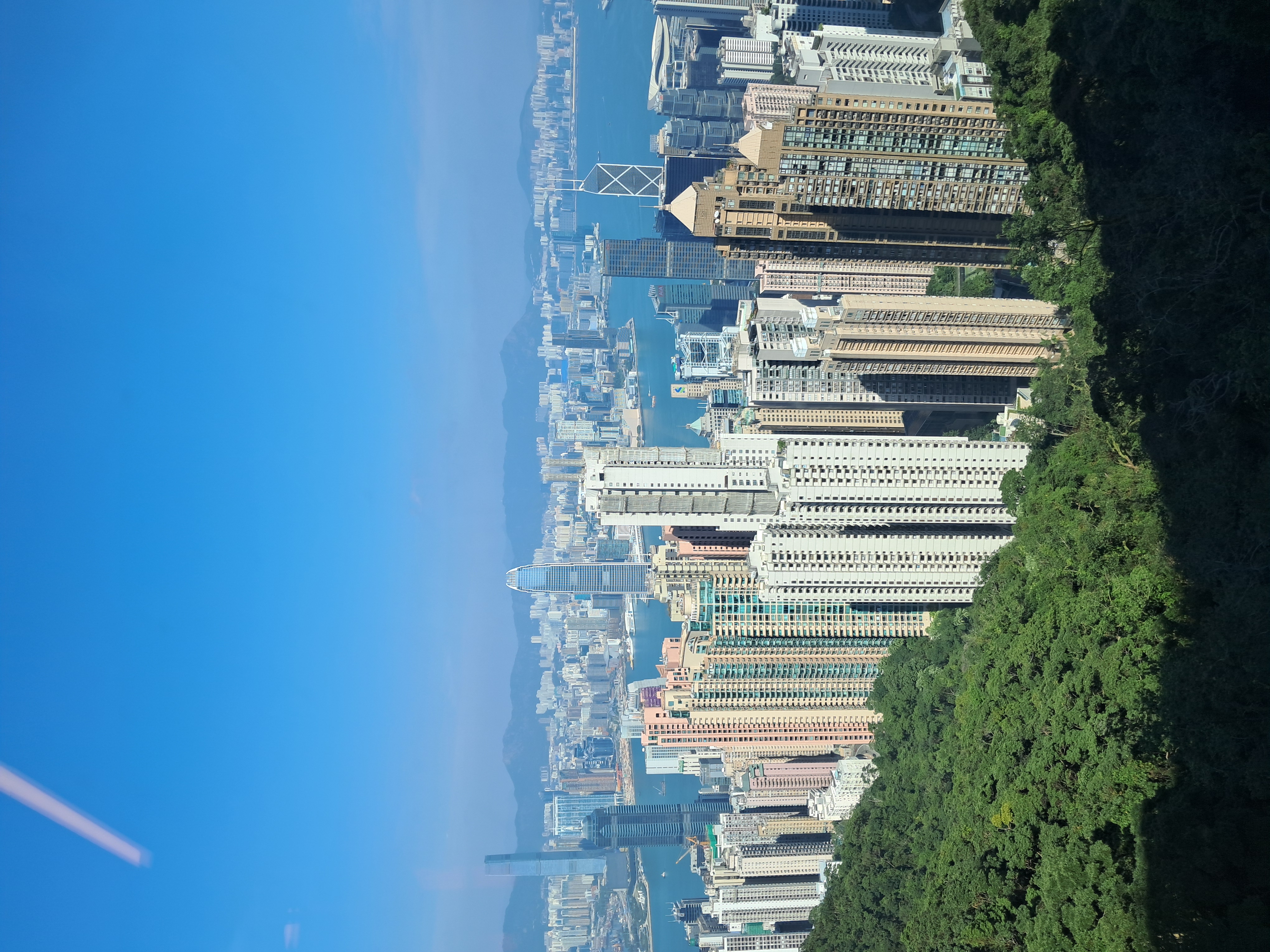
Hong Kong Public Transport Guide
Hong Kong is one of those cities where getting around is surprisingly easy, even on your very first trip. The moment you land at Hong Kong International Airport, signs in English and Chinese clearly guide you towards "Trains to City" or "Public Transport". Before you leave the terminal, it's worth picking up an Octopus card.
Octopus Card
For any tourist in Hong Kong, the Octopus card is the single most useful thing to have. Think of it as a reusable, rechargeable travel wallet that you simply tap to pay. You can use it on the MTR (metro), Airport Express, buses, trams, many ferries and light rail, and also for everyday purchases at convenience stores, some supermarkets, fast-food chains, cafés and vending machines.
Game Changer: In practice, you can go through an entire day in Hong Kong without taking out your wallet - your Octopus card will pay for almost everything from metro rides and ding ding trams to a coffee at Starbucks.
You can get an Octopus card issued for HK$39, this amount is not refundable, and then top it up with stored value. Either way, you can buy and top up Octopus cards at MTR and Airport Express counters, 7-Elevens, and other locations all over the city.
Octopus card is also forgiving if your balance dips low. The system allows your balance to go slightly negative (up to a small limit) to let you complete a journey, after which you must top up before using it again. The minimum recharge is of HKD $50, you can get it topped up at nearest 7-elevent outlet, which is easy to find and nearly everywhere in Hong Kong.
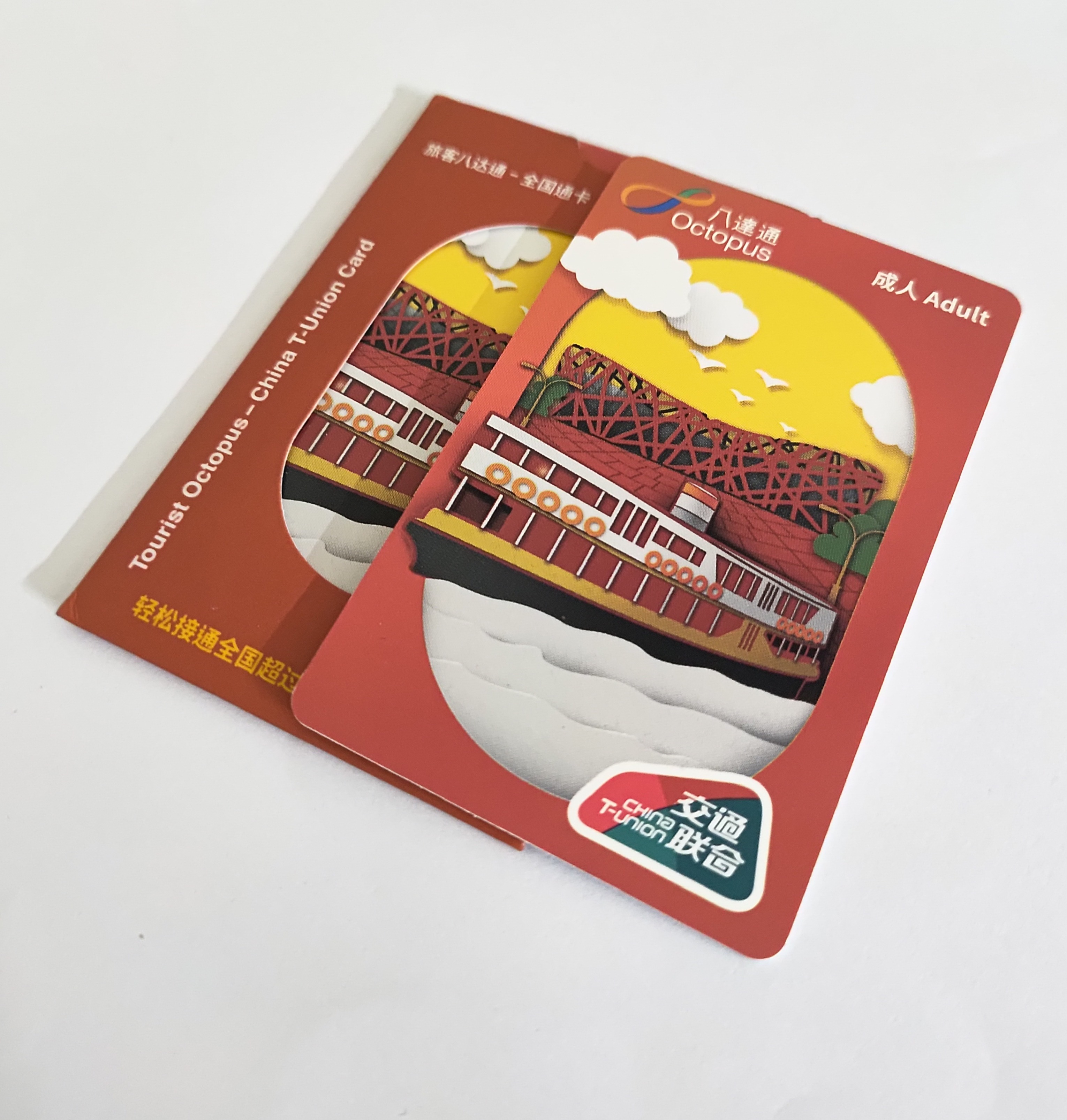
The Octopus card is essential for MTR, buses, ferries, and most convenience stores.
Airport to City and Back
Once you have your Octopus, the next decision is how to get from the airport into the city. The fastest option is the Airport Express, a dedicated train line connecting the airport to Tsing Yi, Kowloon and Hong Kong MTR stations. The ride from the airport to Hong Kong Station takes under half an hour, with trains running roughly every 10 minutes. The trains are modern, air-conditioned and comfortable, usually with free Wi-Fi and charging points.
Pricing: Fares are distance-based, but the airport to Hong Kong Station journey is a fixed, higher fare compared to normal MTR lines. Journey from Airport to Hong Kong station costs HK$120 if using Octopus card.
We paid HK$170 for 2 people when travelling from Airport to Hong Kong station. You get discount on Airport express if you are travelling in group of 2 or more. If travelling alone you can check Klook app for any discount on Airport Express tickets.
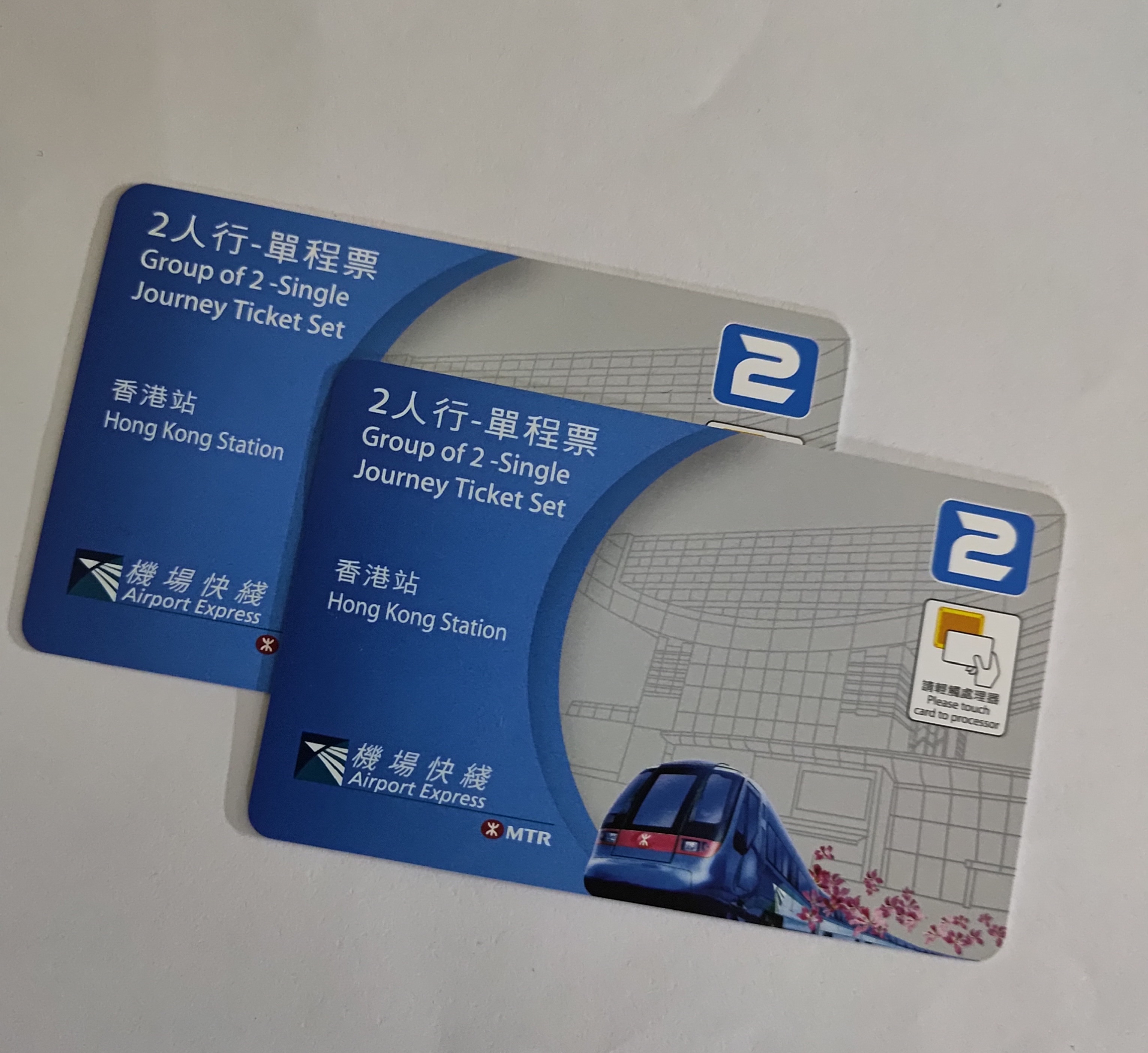
You'll find MTR and Airport Express customer service counters as well as convenience stores like 7-Eleven right in the arrivals area, and the airport offers free Wi-Fi so you can quickly check routes on the MTR app or Google Maps.
MTR Hong Kong
Once you're in the city, the MTR becomes your main mode of transport. Wherever you are in city, you can always find an MTR station within walkable distance. The network covers most of the areas visitors care about, with lines criss-crossing Hong Kong Island, Kowloon and parts of the New Territories.
Trains generally run from early morning to past midnight, and frequency is high - every two to five minutes at busy times, slightly longer late at night. Stations and trains have clear signage and announcements in Cantonese, English and Mandarin, so it's hard to get completely lost. Fares are distance-based and usually fall in the HK$5-HK$20 range for typical trips within the urban areas.
Using the MTR: Using the MTR with an Octopus card is straightforward - tap your card at the entry gate, ride to your destination, and tap again when you exit. The system automatically calculates the exact fare for the distance travelled. This is cheaper and far more convenient than buying single-journey tickets every time.
When we travelled to Disneyland from Sheung Wan, we took the Island Line one stop to Central, walked indoors to Hong Kong Station, boarded the Tung Chung Line towards Tung Chung, got off at Sunny Bay, and then took the Disneyland Resort Line train with its Disney-themed carriages. All the way, we just followed signs and tapped the same Octopus card at the start and end of each journey.

Buses and Tram
Beyond the MTR, buses fill in the gaps and can be both scenic and practical. Several companies operate routes that reach hilly residential areas, beaches, and neighbourhoods without MTR stations - for example, much of the south side of Hong Kong Island and deeper parts of the New Territories.
To ride a bus, you typically board at the front, tap your Octopus on the reader once, then find a seat. On most routes, you pay a fixed fare when boarding. If you pay cash instead of Octopus, you need exact change because drivers do not return change.
The Iconic Ding Ding Tram
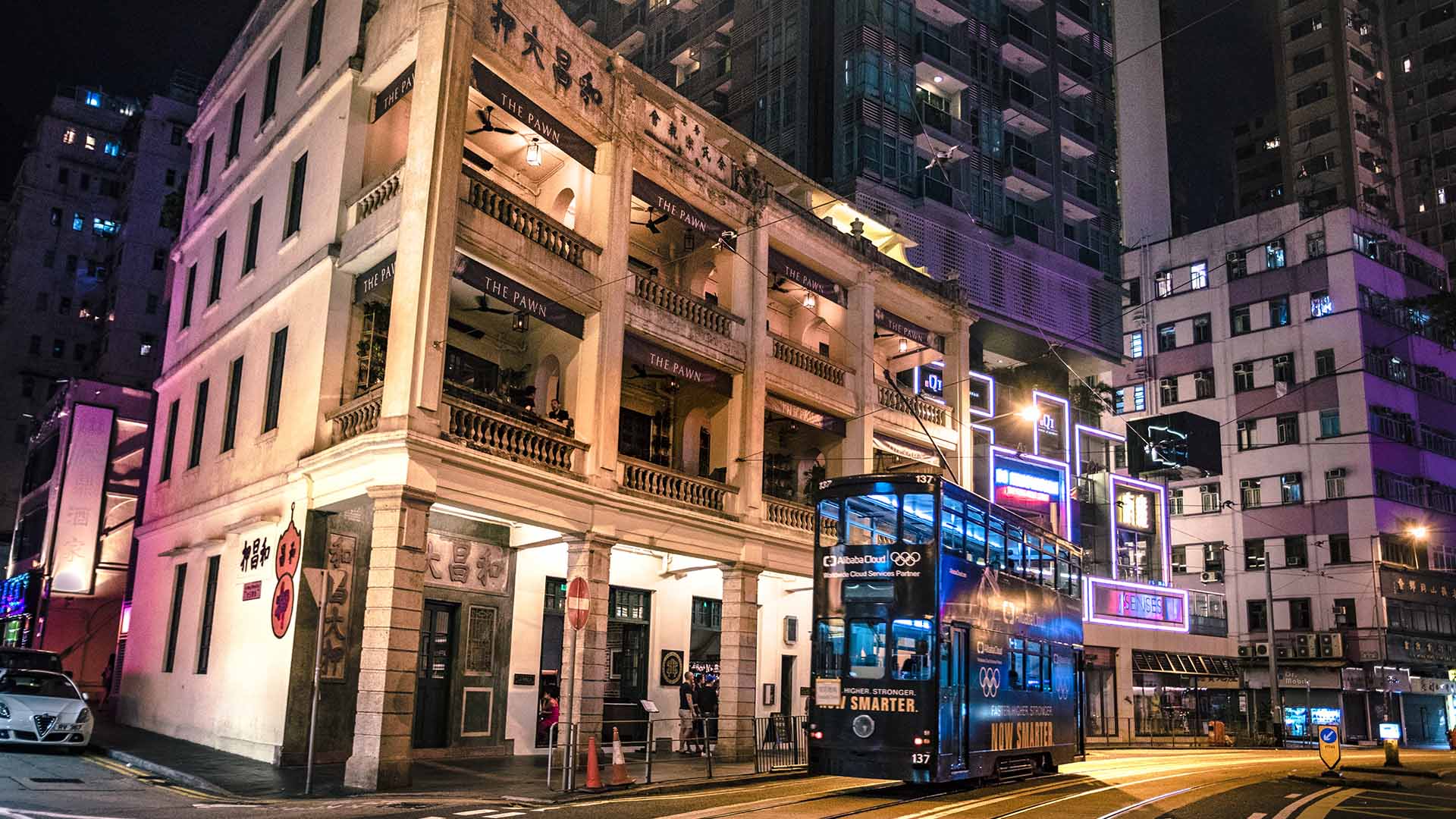
One of the most charming and uniquely Hong Kong ways to get around is the Ding Ding tram on Hong Kong Island. This historic double-decker tram system runs along the island's northern shore, from Kennedy Town in the west to Shau Kei Wan in the east, with a loop down to Happy Valley. It passes through important districts like Sheung Wan, Central, Admiralty, Wan Chai and Causeway Bay.
Most Scenic Route: The trams are best if you want to explore the city at leisurely pace - you sit upstairs, open a window and watch the city glide by at street level. The fare is very low - a flat amount for adults, with reduced fares for children and seniors - and it doesn't matter how far you go.
You board from the rear, ride until your stop, then walk to the front and tap your Octopus or drop exact coins into the fare box as you get off.
Taxi and Uber
Taxis are readily availaible in Hong Kong. You can use Uber App to book a taxi and some taxis will even accept octopus cards. Honestly on our 7 day trip to Hong Kong we did not use Taxi even once because the public transport system is so good.
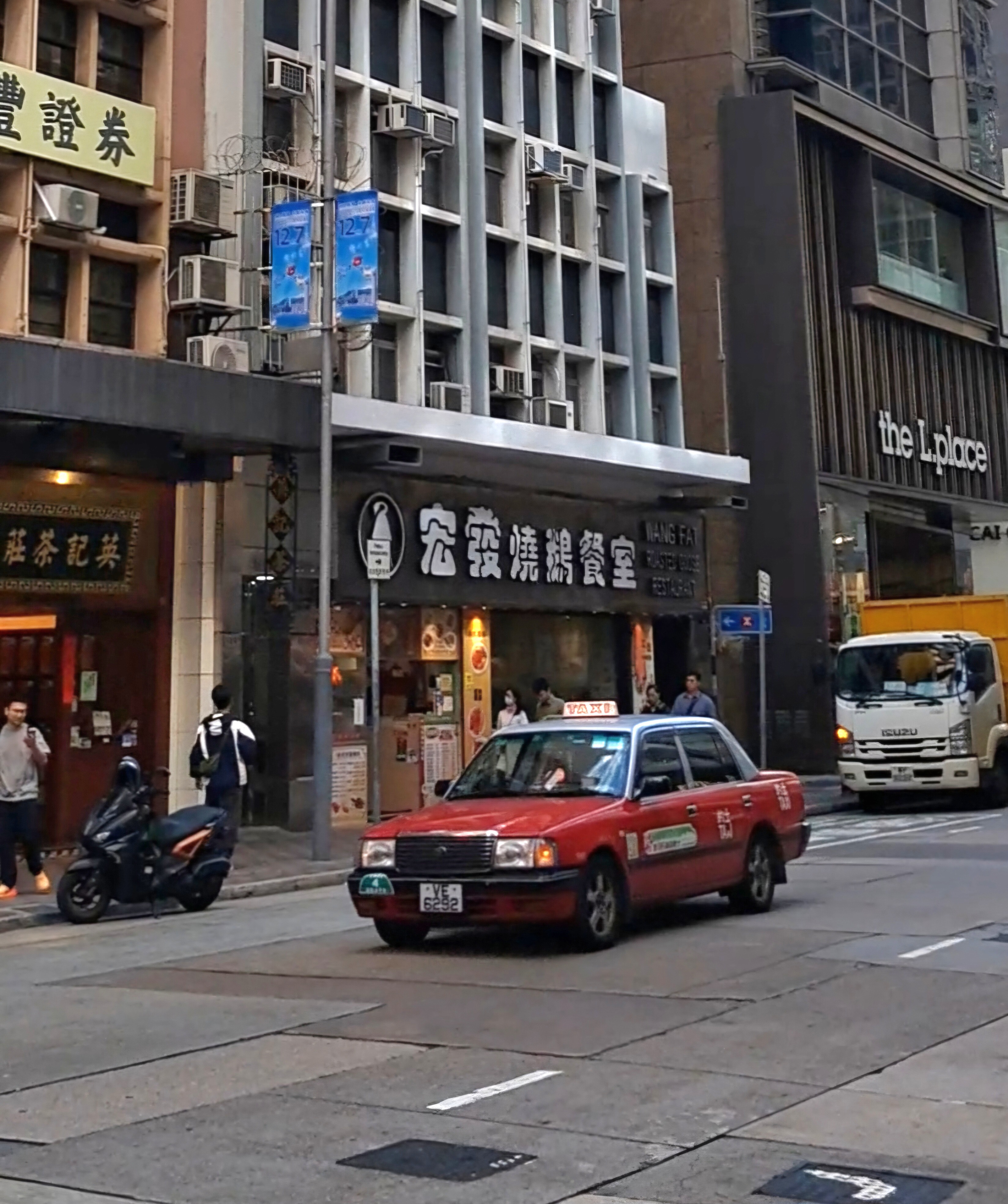
Taxis are readily available but are often unnecessary due to superior public transport.
Final Thoughts
A first-time visitor's transport strategy in Hong Kong is simple. At the airport, get an Octopus card immediately. Choose between the fast but slightly pricier Airport Express and the slower but cheaper airport buses depending on your budget and hotel location.
Once you are in the city, rely on the MTR as your main mode of travel, use buses to reach places not covered by the metro or when you want a scenic double-decker ride, and hop on the Ding Ding tram to explore Hong Kong Island at a slower, more cinematic pace.
With that combination and one little Octopus card in your pocket, Hong Kong's transport network becomes intuitive, efficient and almost fun to navigate - even on your very first visit.
Looking for more ways to explore? Browse the full guide library.
← Back to all guides